
The Lord's Supper : Presence
PRACTICING YOUR FAITH
Mark Warner
3 min read
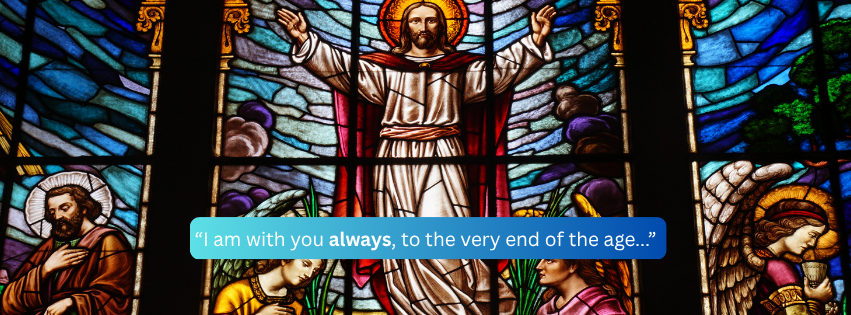

God uses the observance of the Lord’s Supper to draw us to himself. There’s something about the repetition of the celebration that effects us at a deeply emotional level. Why? Because we’re rehearsing Christ’s death and resurrection. It’s Christ’s body broken for us: the forgiveness of sins. The cup we share, Jesus says, is the cup of the new covenant in his blood, the new relationship we have with God the Father, the renewal of all things in the Spirit. So each time we take the bread, we open ourselves to his forgiveness anew. Each time we receive the bread and the cup, we’re rehearsing our reconciliation with God and one another. It’s meant to draw us closer to God. In a very real way, the Lord’s Supper is a drama that requires our participation as actors.
How many of you were in a school play when you were growing up? I was a tree once in grade school — leafy, green but still able to dance. I also played a flower to rave reviews, at least my mother said I was adorable. Later, after paying my dues, I graduated to meatier roles. I was a talking hot dog in third grade. And then, in high school, I hit the big time. I was cast as Mayor Shin in Music Man. I played Motel Kamzoil in Fiddler on the Roof and I was a left-handed, violin playing Sherlock Holmes in Sir Arthur Conan Doyle’s Sherlock Holmes. Also, in a bit of type casting, I played a pastor in a church Christmas play. But it’s not just the lead roles we remember. Any time you participate as an actor in a drama, you tend to remember that much more than you remember a teaching, for example.
Memorizing your lines, paying attention to blocking, the repetition, it sticks with you! It stamps you. It becomes a part of you. It stays with you because you’re a participant and not just a hearer only. Chances are you can still remember bits and pieces of the lines you memorized even if you committed them to memory thirty or forty years ago. The Lord’s Supper is like that. It’s a drama. It’s a reenactment, if you will, of the Last Supper, a retelling of the death and resurrection of Christ AND it foreshadows the day when we’ll all sit down for a meal with him in the Kingdom to come! We’re rehearsing for that day, practicing his presence.
The Lord’s Supper has always been about his presence. When we come to the table and tend to his presence, our eyes are opened and we become more aware of him. The first time this happened, after the resurrection, was on the road to Emmaus. On the very day Jesus rose from the dead, two of his followers were walking to the village of Emmaus, talking about everything that had happened.
Suddenly, Jesus himself came along and joined them and began walking beside them. But they didn’t know who he was because God kept them from recognizing him (Luke 24:15-16 NLT).
Hearing how disappointed they were…
We had thought he was the Messiah who had come to rescue Israel (Luke 21:24 NLT).
…and confused over the his death and resurrection, Jesus took them to task. He said,
“You are such foolish people! You find it so hard to believe all that the prophets wrote in the Scriptures. Wasn’t it clearly predicted by the prophets that the Messiah would have to suffer all these things before entering his time of glory (Luke 24:25 NLT)?”
He, then, went on to explain what all the Scriptures said about him and still they did not recognize him. As they arrived in Emmaus, they invited Jesus to stay in their home, which always included a meal around a table. While they were at table, Jesus…
…took bread, gave thanks, broke it and began to give it to them (Luke 24:30).
Where have I seen that before? And, suddenly, their eyes were opened, and they recognized him. He drew near to them and revealed himself. And they…
…recognized him as he was breaking the bread (Luke 24:35 NLT).
There’s something unique, something special about the practice of the Lord’s Supper. I can’t fully explain it, but somehow, just like that day in Emmaus, Jesus’ presence is revealed in the breaking of bread. When we come together to rehearse his death and resurrection, to celebrate his forgiveness, to reconcile with one another and foreshadow the day when we’ll eat and drink with him anew in the Kingdom to come, he is uniquely with us, real and recognizable around the table, present with us together in an unusual, tangible way. We need to come to the table with expectation, looking for him among us in the taking, the thanking, the breaking and the giving of the bread. I can’t underline this enough. The Lord is always present at his supper, and he longs for us to recognize his presence.
Get In Touch
